


Vitamins and minerals >>>> Para-aminobenzoic acid is a vitamin
Para-aminobenzoic acid is a vitamin.

Vitamin B10 is represented by the chemical compound Para - aminobenzoic acid, which is an interesting substance in its properties that counteracts the antibiotics Sulfinylamides and at the same time stimulates the growth of the bacterial population in the body. It was in living cultures of fungi and bacteria that the component of Para-aminobenzoic acid was first found, which aroused the interest of scientists because of its antagonistic effect on bacteriostatic drugs.
Such an unusual effect of Para-aminobenzoic acid on bacteriostaticity makes it inconvenient for use during the period of taking antibacterial drugs, but in terms of maintaining the beneficial bacterial microflora of the body, it has no equal.
Studies of Para-aminobenzoic acid have shown that its action extends far beyond the digestive tract, where beneficial bacteria live, which are involved in the formation of the general immune status.
The para-aminobenzoic acid - is a vitamin and the main participant in metabolic processes in the body, and this fact is reflected in the condition of the skin, hair, cellular structures of internal organs and tissues.
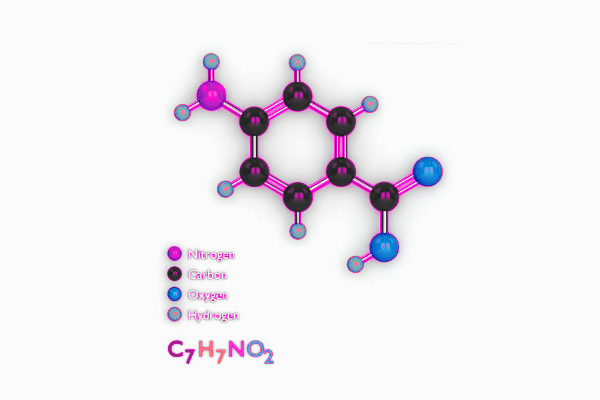
Vitamin B10 is quite common in food, but unfortunately, poor quality nutrition can reduce the amount of vitamin B10 supplied with food, which will certainly affect the state of those organs for which vitamin B10 is responsible, and the metabolic processes in which this vitamin is involved group B.
With a lack of Para-aminobenzoic acid in the body, the protective effect of the immune system is reduced, which is provided by bacteria that live in symbiosis with the human body (lactobacilli, bifidobacteria). The quality of the process of food digestion in which bacteria – symbiotes participate suffers from a lack of Para-aminobenzoic acid. This gives rise to a number of health disorders - flatulence, diarrhea, poor bowel permeability, diseases Colitis, Paraproctitis, Hemorrhoids, as well as infectious bowel disorders, when instead of beneficial bacteria colonies of harmful bacteria begin to grow - symbiotes, also found in the human body, but for the time being not showing their harmful effects due to their small number.
Vitamin B10 has important functions in maintaining the balance of substances entering the cells of the skin and hair. It turned out that vitamin B10 is one of the important enzymes of protein metabolism and a means of preventing aging - inhibits the processes of cellular aging.
One of a number of important advantages of Vitamin B10 is its direct participation in the processes responsible for skin pigmentation. So the lack of this chemical leads to early loss of hair pigment and disruption of the formation of full-fledged melanocytes - inhibits the production of melanin. The consequence of such a violation is early graying of hair and hair loss. With a lack of melanin, the skin becomes faded and does not form a protective layer of melanocytes in the sun - a tan, which makes it possible for harmful ultraviolet radiation to penetrate deep into the skin and stimulate the development of skin cancer cells. If a person's nutrition is sufficiently diverse and complete in terms of the amount of food taken and assimilated, then there is no need to worry about hypovitaminosis or vitamin B10 deficiency.
But in cases of poor and monotonous nutrition, there is a high risk of getting hypovitaminosis of Para - aminobenzoic acid and, as a result, acquiring early gray hair, fading skin, poor quality of digestion in general and low immune status (poor immunity), which in itself will become a factor in the development of many diseases, at first glance, have no connection with vitamins.
Para-aminobenzoic acid is widespread enough in nature so that specially made vitamins with its participation could not be used. This compound is found in both plants and animal tissues, which, with a balanced diet, allows you to replenish its reserves in the body with each meal.
The most important foods in the diet with a high content of Para-aminobenzoic acid (in μg per 3.5 ounces of product):
- Rice bran - 1600 μg per 3.5 ounces;
- Liver (beef, lamb, goat, big game) - 250 μg per 3.5 ounces;
- Kidneys (beef, lamb, goat, big game) - 180 μg per 3.5 ounces;
- Wheat grain (germs and seedlings) - 180 μg per 3.5 ounces;
- Fully ripe wheat grain - 60 - // -;
- Pig, wild boar, young piglets - 80 - // -;
- Cattle meat - 65 - // -;
- Brains (cattle, pig, big game) - 70 - // -;
- Eggs (chicken, quail, wild bird) - 40 - // -;
- Natural milk (goat, cow) - 10 - // -;
- Potatoes - 36 - // -;
- Carrots - 22 - // -;
- Spinach - 60 - // -;
Usually para-aminobenzoic acid is included in standard vitamin kits called Vitamin H1 or Vitamin B10.
Its daily intake is calculated on the basis of the fact that the intestinal bacteria themselves, the reproduction of which it stimulates, produce Para-aminobenzoic acid in the course of their vital activity. And if there are disorders associated with intestinal microflora, dysbiosis, dysbacteriosis, then the daily consumption of Vitamin B10 increases.
Vitamin B10 is useful in its artificial forms during periods after antibiotic therapy and together with the intake of probiotics and prebiotics to stimulate the planting and growth of colonies of beneficial intestinal microflora.
In order not to slow down the effect of antibiotics during the treatment of diseases, it is not recommended to increase the doses of Para-aminobenzoic acid artificially in excess of those that the body receives with food with a full balance of food products.












Read
Read













