


Neurological diseases >>>> Neuritis of the facial nerve - causes and treatment options
Neuritis of the facial nerve - causes and treatment options.
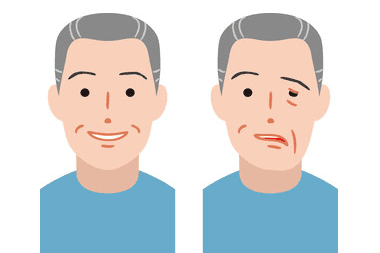
The face, like other areas of the human body, is enveloped in a system of nerve fibers that are formed in the branches. There are twelve pairs of cranial nerves, the fifth pair of which is called the trigeminal nerve. It has three branches, each of which is located in a certain area of the face: the first passes in the forehead region above the eyes, the second stretches to the upper jaw and the third innervates the lower jaw. Why are they talking about couples? Because all these branches cover the face on both the left and right sides.
Like all nerve fibers, the fibers of the trigeminal nerve are associated with muscle fibers and ensure their work (contraction or relaxation), in particular, the branches of the trigeminal nerve provide the sensitivity of the facial skin and the work of facial muscles, which in turn give our face an expression, cheerful or frowning. evil or good. Therefore, it is extremely important that the muscles of the face are in perfect order and work harmoniously.

There are many factors that can disrupt muscle function, that is, they affect the state of nerve fibers: they squeeze, injure or destroy them. As a result, paresis (weakening of the motor function of one or a group of muscles) or muscle paralysis (loss of motor function) occurs.
This is how diseases of the trigeminal nerve arise: one of them is called "neuralgia", and the other - "neuropathy".
Neuralgia of the trigeminal nerve (another formulation of the name: trigeminal neuralgia , neuritis or neuralgia of the facial nerve, Phottergil syndrome) - reflects the pathological state of the facial muscles, its paresis or paralysis, accompanied by paroxysmal pain and changing the appearance of the face (skewed to one side). The pathological condition of the first branch of the nerve often provokes migraine-type headaches, but it is the defeat of the second and third branches of the facial nerve that is called trigeminal neuralgia.
It is necessary to distinguish between neuropathy of the facial nerve and neuralgia of the facial nerve when making a diagnosis, since the methods of treatment for these conditions differ.
With neuralgia, characteristic paroxysmal pain occurs, but they are absent in the intervals between attacks, and the sensory and motor functions of the muscles are not impaired. Whereas with neuropathy, the pain is constant, accompanied by a violation of the motor functions of the muscles and their sensitivity.
Neuralgia or neuritis is symptomatic or idiopathic. Symptomatic neuralgia appears against the background of the development of certain diseases (associated with circulatory disorders, tumors, infections, diseases of ENT organs, demyelination of nerve fibers (multiple sclerosis) or a number of other diseases) and acts as one of the symptoms of the disease.
Idiopathic neuralgia is considered as an independent disease and is associated with a traumatic effect directed to the nerve fibers of the nerve.
Causes of trigeminal neuralgia.
- The most common cause is the compression of the root of the facial nerve in the area where it enters the brain stem by the cerebellar artery emerging from the stem. As a result of movement, the artery can touch or loop around the branch of the trigeminal nerve and thus exert a compressive effect on the nerve fibers, as a result of which the myelin layer of the fibers can even be destroyed.
- One of the reasons may be a narrowing of the lumen of the bone canal (as a result of inflammatory processes in adjacent areas, for example, with periodontitis or sinusitis), along which the nerve passes.
- Destruction of the myelin sheath as a result of damage by the herpes virus.
- Drafts causing hypothermia and spasm of the facial muscles.
- The pressure exerted on a nerve bundle by a cyst or tumor.
- Neurogenic and vascular disorders.
- Disorders in the endocrine system.
Signs of trigeminal neuralgia.
- Paroxysmal shooting, piercing pains. Time can pass between attacks (day, week, month) or they are repeated several times a day (hour) in succession.
- Unilateral contraction of facial muscles.
- An attack may be accompanied by a tic (twitching of the facial muscles).
- The attack is provoked by the act of chewing, opening the mouth, begins at the moment of talking, shaving, swallowing, touching the face, blowing cold air.
- The pain syndrome can resemble pain in the eyes, ear, lips, toothache, pain in the upper or lower jaw.
Treatment of facial nerve neuritis.
There are two types of treatments for facial nerve neuralgia:
- conservative (pharmacological and physiotherapeutic)
- surgical
Pharmacological and physiotherapeutic treatment
- Anticonvulsants are prescribed: finlepsin, carbamazepine (tegretol, oxcarbamazepine), pregabalin, gabapentin;
- antispasmodics;
- physiotherapy: Bernard's currents, acupuncture, paraffin applications.
Medication and physical therapy are not always effective (for example, due to incorrectly calculated doses or irregular drug intake).
Surgery
Microvascular decompression of the root (this method of treatment is considered the most effective). During the operation, trepanation of the posterior cranial fossa is performed and special polymer sponges (polymer implants) are placed between the nerve bundle and the vessel.
Radiofrequency destruction of the root is based on destruction of the trigeminal nerve root using precisely focused gamma radiation or the so-called gamma knife (Stereotactic Radiosurgery).












Read
Read













