


Cardiovascular system >>>> Why is infectious endocarditis dangerous?
Why is infectious endocarditis dangerous?
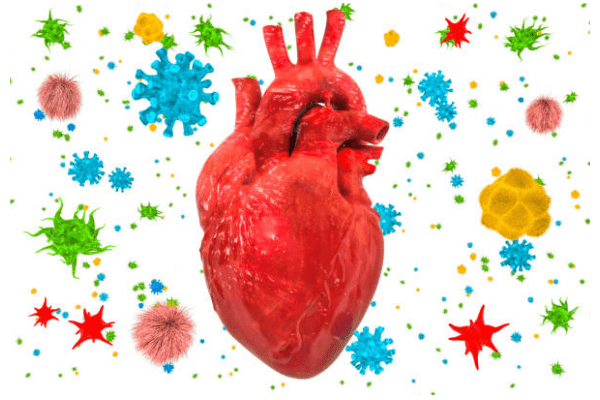
Infective endocarditis is a common complication of infectious diseases of various etiologies (viral, bacterial, fungal). But the disease itself, infective endocarditis, develops due to damage to the tissues of the heart valves, parietal endocardium, endothelium of the aortic walls and large vessels by bacterial or fungal infection.
Infective endocarditis often develops as a primary disease when infectious agents are transferred directly to the affected area - to the endocardial surface. But the same disease may be secondary to the original infectious disease, which caused the development of such a complication as infective endocarditis.
Bacterial infection (staphylococci, streptococci, enterococci, gram-negative bacilli and other microorganisms), less often fungal infection (Candida, Aspergillus fungi) affects the tissues of the heart valves, the paravalvular zone or the parietal endocardium.
The route of infection can be directly related to an in-hospital infection, when microorganisms enter the wound during the operation (with prosthetics of heart valves, implantation of defibrillators, implantation of pacemakers) or in the postoperative period in case of violations of the sterility of dressings. There is also a route of infection associated with an out-of-hospital transient infection (injections of drugs in non-sterile conditions, transferred infectious diseases with subsequent seeding of various tissues, organs and organ systems, medical interventions in the field of dentistry, cosmetology, dermatology, pulmonology, gastroenterology, urology, gynecology).
The tests carried out to identify the microorganism that caused infective endocarditis are sometimes inoculated with the most unusual forms of microorganisms that are not typical for the organs of the cardiovascular system, for example, Lactobacillus, Corinebacterium, Pneumococci, Legionella and others. This suggests that the factors of transmission of infection in the case of infective endocarditis can be varied. Almost any infection that develops in any corner of the human body can affect the heart.
The danger of infective endocarditis disease lies in the fact that treatment based on specific antimicrobial therapy is often ineffective:
- due to the impossibility of identifying the microorganism at the sowing stage, since the microorganism turns out to be difficult to cultivate,
- due to the fact that the identified microorganism is insensitive to antibiotics,
- due to the development of an immediate allergic reaction to an antibacterial drug required for the treatment of an identified form of a microorganism,
- due to the need for prolonged treatment with antibacterial drugs (for example, aminoglycosides), which have a sufficiently high toxicity not only in relation to the microorganism to which their action is directed, but also for the person himself forced to use aminoglycoside therapy - this can lead to toxic damage to the organs of the urinary system and hearing organs.
No less dangerous are the consequences of infective endocarditis associated with:
- with persistently continuing to develop infectious seeding against the background of drug therapy, leading to abscesses of internal organs, infectious arthritis, septic shock;
- with neurological complications (meningitis, encephalitis);
- with thromboembolism of vital blood vessels;
- as well as with embolism of the vital organs (spleen, kidneys, myocardium, brain).
- Protect against infections of various kinds by all available methods,
- Do not engage in self-antibiotic therapy to prevent the development of resistance of microorganisms to life-saving medications,
- Avoid various medically unreasonable interventions in tissues and organs,
- Avoid factors potentially injuring the skin and mucous membranes.
Infective endocarditis is a deadly disease with a high predicted mortality rate. In addition to deadly bacterial lesions of important organs, infective endocarditis can be caused by fungal infection with a 50% fatal outcome. For this reason, it is very important to prevent infective endocarditis:












Read
Read













