


Herbal medicine recipes >>>> Roots and nuts coffee substitutes
Roots and nuts coffee substitutes.

Coffee drinks made from the roots and nuts of various edible plants are called coffee surrogates. These drinks have a tonic effect, contain tannins (tannins like the tannins of tea leaves) and can be used as substitutes for coffee drinks.
To prepare coffee surrogates, you need to stock up on preparations from the roots and nuts of some plants in advance. The raw materials for the preparation of coffee substitutes include Chicory roots, Elecampane roots, Goatbeard roots (Oat root) , Burdock roots, Dandelion roots, and you can also use rhizomes of reeds and reeds. All roots are harvested from plants of the first or second year of life.
Petiolate oak acorns, hazelnuts, chestnuts are used from walnut trees for the preparation of coffee surrogates.

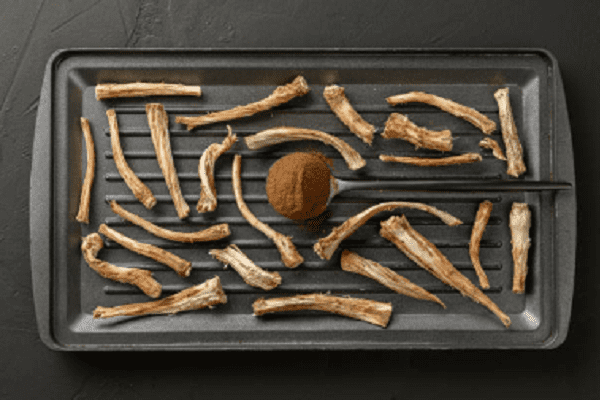
The principle of making a coffee drink from roots and rhizomes of the listed plants is the same for all types of the listed plants. The roots are dug up in late autumn (late October - November), when all the nutrients have already passed into the root system. The dug roots are thoroughly washed, if necessary, the surface layer of the root is cleaned with a knife (you can scrape off, not cut off), cut into smaller pieces (they will have to fit in a coffee grinder) and spread to dry on a wire rack or parchment (when drying the roots on paper, they all the time turn different sides). The dried roots can be continued to dry in the air until they are completely dry (for example, tied in the form of a garland to the fasteners) or to speed up the process they can be dried in the oven at low temperatures or in special electric dryers (as fruits and berries are dried). Completely dried (hardened roots) are suitable for creating a coffee drink, otherwise the product (powder) will begin to mold over time.
The completely dried roots are fried in a pan (without oil) until dark brown (it is important that the roots do not burn, otherwise the drink will be bitter, like burnt coffee), then grind into a powder in a coffee grinder, sprinkle on glass or tin cans that are hermetically sealed, write, so as not to confuse the ingredients, and put it in storage. You can store dried root preparations until the moment of use and grind them immediately before use, but dried roots are also stored in a hermetically sealed container so that the aroma of essential oils does not disappear.

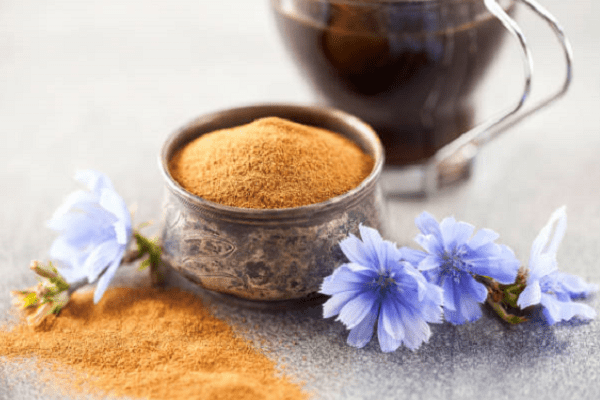
Coffee substitutes can be prepared both from the roots of a particular plant, or you can make an assorted coffee substitute, depending on what goals are pursued when using the coffee substitute. For example, if there is a need to transform a coffee drink from the roots in a choleretic agent, then most of the powder from the roots of Chicory is added, when it comes to a drink for the treatment of a cold cough, more powder of the roots of Elecampane is used, for the anti-inflammatory and diuretic effect - more powder of the roots of Burdock, and so on. Unlike root infusions, a coffee drink from root powder is brewed (like coffee) - in a proportion of 6.8 ounces of water, one teaspoon of powder. The root powder coffee substitute can be drunk as a standalone drink, can be added to milk, or milk can be added to a root coffee drink.
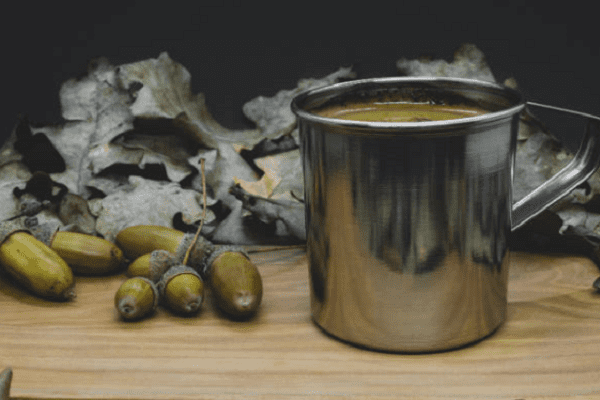

To make a coffee drink from acorns, you need ripe acorns (maybe a little greenish), but removed from a tree, otherwise they can be wormy. The acorns are laid out on a baking sheet in a preheated oven and the acorns are dried for five minutes until they burst. Remove the cracked acorns, peel and then fry, as nuts are usually fried for food, until they turn dark brown. Cool acorns and grind in a coffee grinder into powder, store in a hermetically sealed container in a dark place.
The chestnut coffee substitute is prepared according to the principle of an acorn drink. Ripe chestnuts are harvested from the Castanea satíva tree, not from the decorative Horse Chestnut. The fruits are not picked up from the ground, only hanging on the tree (the thorny skin should be cracked, and the chestnut itself has not yet fallen out of it), dried in the oven, peeled from the shell and then fried until brownish. Grind in a coffee grinder to powder and store in an airtight container. Purchased chestnuts can be used.
Collect Hazelnuts from the tree (or buy already peeled from the shell). Put the self-picked nuts on a baking sheet in a preheated oven and wait for a few minutes for the nut shell to burst. Peel the nuts (or use purchased ones) and fry over medium heat until dark brown - do not overcook. Grind the roasted hazelnuts in a coffee grinder and place in an airtight container for storage.
To prepare a coffee drink from acorns, chestnuts or hazelnuts, the powder from these nuts or acorns will have to be brewed like coffee - one teaspoon of powder per 200 ml of water. A coffee drink made from chestnuts, nuts and acorns tastes like cocoa, so you can safely drink it with milk.












Read
Read













