

Interesting >>>> How is Artificial Intelligence useful in medicine?
How is Artificial Intelligence useful in medicine?
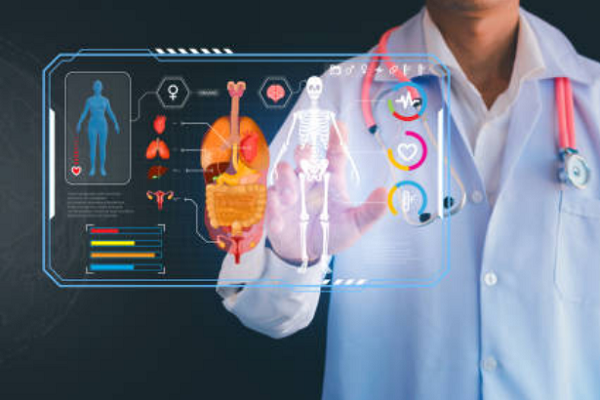
To understand how Artificial Intelligence can be useful in the medical field, it is necessary to understand what Artificial Intelligence is and how it works, as well as what distinguishes Artificial Intelligence from Human Intelligence.
The invention of Artificial Intelligence has created conditions in medicine for reaching a new level of medical care for people.
But few people understand the benefits of Artificial Intelligence in medicine, and it may be especially unclear to the medical professionals who use it to improve their efficiency.
Large volumes of patient health information require rapid processing and classification, as well as analysis of laboratory and other research data, to accurately diagnose and prescribe appropriate treatment. The use of artificial intelligence algorithms for rapid computer processing of information allows healthcare professionals to expedite the processing of patient complaints, classify patients by areas of medical care, and refer them to specialized physicians.
Despite the fact that scientists have tried to bring the name of the algorithm closer to human thinking, giving it the name Artificial Intelligence (or AI for short), Artificial Intelligence (AI) still remains an algorithm and a mathematical model that is close to the mechanisms of human thinking, but does not completely replace this thinking.
The fact that Artificial Intelligence is capable of learning suggests that this learning could escape the control of the humans working with the AI algorithms. However, in reality, these algorithms were created and controlled by humans, meaning that it's unlikely that Artificial Intelligence will be able to transcend human control.
Artificial intelligence operates in ways that are both similar and distinct from the human thought process. To create AI algorithms, scientists had to simulate the functioning of neurons in the human brain, describe them mathematically, and only then create an algorithm that could operate according to these principles. Scientists have long been able to describe the electrical impulses of the brain using graphs. These graphical representations of the electrical signal's progression through the neural circuits of the human brain can be described by mathematical functions, which are the basis of AI algorithms.
There are several models of artificial neurons described by mathematical functions. This work of artificial neurons is aimed at achieving various goals in the application of artificial intelligence algorithms in medicine. For example, artificial intelligence (or an artificial intelligence algorithm) can identify received data in the form of an image, sound, or word, sort them by identified similarities, create groups (clusters), and perform clustering (grouping) based on the identified features (differences or similarities in image details, written words, or spoken sounds). AI can use the identified features to find similarities and differences and correlate them with existing information in databases.
If we look for similarities and differences in the functioning of Artificial Intelligence and Human Intelligence, we can cite the example of how humans, when thinking, operate on data from their own memory (short-term or long-term), while Artificial Intelligence operates on data collected by humans and stored for them in databases. Humans expand their own memory throughout their lives, starting from birth, while Artificial Intelligence can only use data collected for it by humans.
However, when applied in medicine, Artificial Intelligence can practically replace human medical professionals when emergency diagnostics and accurate diagnoses are required. When, from a variety of therapeutic options, a more effective, calculated approach must be selected to initiate treatment, taking into account all available data about the patient's condition and the symptoms and progression of the disease.
Artificial Intelligence is capable of peering into the deepest layers of the human body's structure and "seeing" the signs of the onset of disease, assessing genetic data and the patient's living conditions to decide on the appropriateness of a particular treatment. What's surprising about Artificial Intelligence is that it can be useful for patients in critical health conditions trying to contact a medical facility for help. AI algorithms can use voice intonation to understand a person's state at the moment of the call and make decisions about the method of initial medical care and the choice of medical specialist for emergency assistance. A person listening to a call for help over the phone doesn't analyze the caller's emotional and physical state, but merely memorizes and records the facts the patient tells them. However, an AI algorithm can detect shortness of breath, speech impediments, and vocal intonations that convey the patient's poor emotional and physical state.
Unlike medical predictions made by humans, no matter how intelligent, AI algorithms are capable of providing more accurate short- and long-term treatment prognoses. This is due to the fact that the human brain requires sufficient time to process informed decisions based on its own experience and acquired knowledge, while AI requires minimal time to mathematically calculate such predictions with a certain degree of probability. Scientists are currently working on AI models, increasing the accuracy of computational algorithms. This should lead to 100% decision-making accuracy by AI. This is crucial in medicine, as every medical decision impacts the patient's future quality of life and survival.
Artificial intelligence is practically indispensable in certain areas of medicine that involve recognizing hardware data (e.g., ECG, CT, X-ray). This is essential for diagnosing cardiac disorders (atrial fibrillation, stroke, heart attack) and analyzing the condition of the vascular system (coronary arteries, veins of the extremities).
Unlike human intelligence, artificial intelligence lacks the ability to imagine and make brilliant discoveries that have never been made before. Its creativity and discoveries are random combinations of existing knowledge. However, in areas of medicine where extensive diagnostic and research experience is accumulated, necessary for making pharmacological decisions and selecting treatment strategies from a variety of treatments with pre-calculated results, artificial intelligence can replace human intelligence. Because AI sees and hears more accurately, reacts more quickly to situations requiring emergency decisions, analyzes initial data extremely quickly, and can save doctors time in making effective clinical decisions, and speed up patient recovery or save lives by quickly calculating treatment strategies. Artificial intelligence essentially performs routine work for medical professionals, which would otherwise take an inordinate amount of time for emergency medical care.
Today, AI algorithm developers are working in areas of medicine that are particularly in demand for accurate diagnoses and subsequent patient care. For example, AI algorithms already exist in surgery that can determine:
- to what extent the patient's organ damage can be operated on,
- choose the most gentle method of performing the operation (open or endoscopic),
- determine the extent of surgical intervention,
- choose the type of operation (with the most gentle result).
In clinical medicine, AI algorithms can already predict the course of many complex diseases (multiple sclerosis, migraines, coronary heart disease, operable and inoperable forms of cancer, and many other illnesses).
Artificial intelligence can detect microscopic abnormalities in tissues and organs that would otherwise require the assistance of multiple staff members, meaning more time can be spent determining the cause of a disease and choosing treatment methods.
Advances in the application of AI algorithms today are already capable of making the work of medical professionals easier by:
- Artificial Intelligence is capable of working with data that is invisible to doctors, for example, the work of hormones in endocrinology, the work of the immune system, and the work of the human nervous system.
- Artificial Intelligence is capable of more accurately studying the structure of living organs and their images (X-ray or computer), since it does not need to visualize what it sees, but can immediately proceed to calculations and conclusions, whereas a doctor or other medical professional is more comfortable working with data translated into images familiar to human thinking.
- In pharmacotherapy, Artificial Intelligence enables rapid selection of drug combinations, the most effective drug-drug interaction regimens, and the minimization of side effects from the chosen medication.
Learn more about modern advances in Artificial Intelligence algorithms in medicine on the website of the AI in Russian Healthcare project for doctors and patients .










Read
Read