


Healthy food >>>> Royal jelly – what is it?
Royal jelly – what is it?
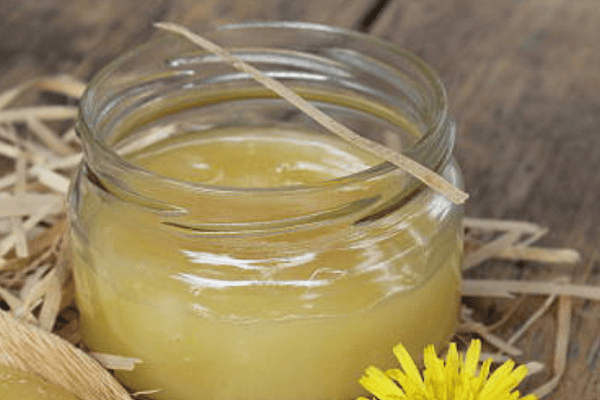
Royal jelly has always attracted great interest from the pharmaceutical industry as a component of medications. In previous years, it was considered a virtual panacea for many ailments. But with advances in science and technology, it has become possible to more accurately study the composition of royal jelly and understand how it can be used in pharmaceuticals and, consequently, in medicine.
Royal jelly itself is a secretory product produced by the maxillary pharyngeal glands of the bees that feed the bee larvae. Each larva is laid by the queen bee in a honeycomb cell, and the young worker bees secrete this secretion into the cells, completely filling the cell. The cell is then sealed, and the larva, feeding on royal jelly, grows and develops into a bee. Naturally, royal jelly (the secretion) has a very beneficial composition for the growth and development of the bee's body. Royal jelly contains high concentrations of proteins, fats, carbohydrates, vitamins, amino acids, fatty acids, mineral salts, enzymes, and hormone-like substances. Proteins and vitamins predominate in royal jelly.
Royal jelly contains 22 amino acids, which are essential for the development and functioning of living organisms. Scientists consider royal jelly to be a biologically active substance and a high-quality nutritional product.
Royal jelly contains trace elements such as iron, magnesium, sulfur, manganese, calcium, cobalt, zinc, phosphorus, silver, nickel, chromium, and B vitamins (especially pantothenic acid). Vitamin B6 plays a vital role in metabolic processes. B vitamins enhance metabolic processes by 5-6 times, allowing the bee generation to quickly develop into full-fledged members of the hive.
To make royal jelly suitable for human consumption, it is collected from uncapped queen cells—honeycombs containing three- or five-day-old larvae. These queen cells contain the highest possible amounts of royal jelly—250-300 mg. To collect royal jelly for mass production, it is collected using vacuum pumps under sterile conditions. To ensure a higher-quality product, the bee colony is supplemented with vitamin C and milk proteins. In such cases, it is possible to obtain royal jelly in larger quantities, for example, 2.5 times the usual harvest.
On farms that specialize in collecting royal jelly, bee swarms are stimulated to establish large numbers of queen cells (honeycombs containing larvae). Observations of various bee species have shown that the common forest bee can establish up to 100 queen cells. Another way to stimulate the production of large quantities of royal jelly is to create artificial honeycombs for the larvae—the queen cells—which the bees fill with royal jelly. Royal jelly decomposes very quickly when exposed to oxygen, light, and room temperature. For this reason, it is recommended to store it in honey as a preservative. The container chosen for storing royal jelly should be strictly airtight. Store the sealed royal jelly in a refrigerator at 32 degrees Fahrenheit (0 degrees Celsius).
Royal jelly has many beneficial properties for the human body. It has a mild antimicrobial and bacteriostatic effect. It inhibits the development of viruses and protozoa. This is especially true for protozoa, bacteria, and viruses of the gastrointestinal tract. Royal jelly acts as an immunostimulant and a nervous system stimulant, thereby increasing overall endurance. It is not recommended to consume it at night, as it has a tonic effect and irritates the nervous system.
It is known that Royal Jelly affects the nervous system, especially the parasympathetic nerves, which control the functioning of blood vessels and smooth muscle fibers (muscles of hollow organs and vessel walls).
Royal jelly affects the functioning of the adrenal glands, releasing more adrenaline, which keeps the human body in good shape.
For medicinal purposes, royal jelly is used as a dietary supplement in very small quantities, which helps treat malnutrition and improve appetite. Royal jelly is beneficial for exhaustion. In those with low blood pressure, royal jelly may increase blood pressure. Royal jelly maintains a cheerful mood, relieves depression, and energizes the body. It is typically prescribed during respiratory infections and during the recovery period after severe respiratory illnesses. The pharmaceutical industry prepares royal jelly as lyophilisates. Tablets are available in a convenient form for use during the prevention of respiratory infections or as a dietary supplement.












Read
Read













