


Plants with a healing effect >>>> What are the benefits of blueberries?
What are the benefits of blueberries?
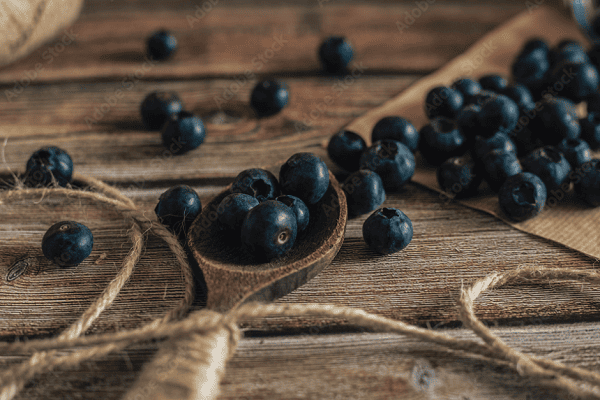
Blueberries are native to coniferous forests. Nature itself inspired this berry's name, but depending on the habitat (pine, mixed, or spruce forest), blueberries have different colors. The blackest blueberries are produced by blueberries grown in spruce forests. In pine and mixed forests, blueberries have a gradation of color (from bright blue to dark blue). Blueberries vary not only in berry color but also in the size of the bush itself, ranging from 6 to 24 inches in height. The shortest blueberry bushes grow in pine forests, from 6 to 10 inches tall, and their berries are also small and slightly dried. However, these blueberries have a distinctive aroma and are easy on the hands. Blueberries from pine and mixed forests are not particularly juicy, but have a very distinctive flavor; they keep better and are less likely to burst during harvesting.
Tall blueberry bushes—up to 16 and 24 inches —grow in spruce forests. This type of blueberry is known for its black fruit, larger size, and juicier berries. However, it is not ideal for storing raw, as it often bursts. Blueberries from spruce forests have a less aromatic aroma, closer to forest, and a sweet and sour taste, unlike berries from pine or mixed forests. However, all berries are suitable for eating raw, and the strongest ones can be used for berry jam, while the weaker berries can be used for confiture.
Blueberries have numerous health benefits, regardless of the forest they grow in. The most popular home herbal remedy for blueberries is their health benefits as a source of the trace element manganese, which is found in higher concentrations in blueberries than in other berries and fruits. Another element found in blueberries is vitamin C. Blueberries are considered a complete source of vitamin C. This vitamin can be consumed from fresh, dried, or canned blueberries.
Blueberries contain seeds that contain oils similar in structure to flaxseed oil and also contain proteins. Therefore, it's beneficial to eat blueberries with the seeds.
Blueberries contain a lot of tannins (astringents), so consuming large amounts of the berries is unhealthy for those prone to constipation. However, blueberries are very beneficial for those suffering from intestinal disorders (diarrhea). All blueberry products are beneficial for those with inflammatory gastrointestinal diseases, as the substances in blueberries have anti-inflammatory properties thanks to tannins.
Eating blueberries with the pits (seeds) improves intestinal motility. However, for intestinal conditions that require a softer diet, the seeds should be removed (grinded and filtered through a fine sieve, colander, or several layers of cheesecloth).
Blueberries are reputed to improve visual acuity, making them useful for preventing various eye diseases directly related to the functions of the visual apparatus.
Blueberry juice and pulp can be used to make mouthwashes for the oral cavity and genitals. These rinses are prepared using infusions, or by steeping the berry pulp in boiling water.
Blueberries are a berry that can easily be transformed into a variety of healthy dishes and drinks. In addition to jam and preserves, dried berries for tea and infusions, blueberries can be used to make fruit drinks, compotes, jelly, lemonade, cocktail toppings, milk, yoghurt, milk porridges, cottage cheese, casseroles, pancakes, pasta, and pie and cake fillings. Blueberries are also used to make ice cream, creams, marshmallows, alcoholic beverages, and low-alcohol drinks. Blueberries are a source of blue and dark blue food coloring for canning or tinting creams and dough, marmalade, and candies.
The easiest way to eat blueberries is to cook them with sugar, add them to a salad, make fruit drink or juice, add them to tea, kefir, or milk, wrap them in pancakes, or spread them on a pastry crust. Simply blend the blueberries with sugar, nuts, or cookie crumbs in a blender or mixer to create a delicious and very healthy puree.
Blueberries can be combined with raspberries or strawberries, apples, plums and pears, melon and vegetables such as pumpkin, carrots or beets.












Read
Read













