

Health for a lifetime >>>> How to properly store medications?
How to properly store medications?
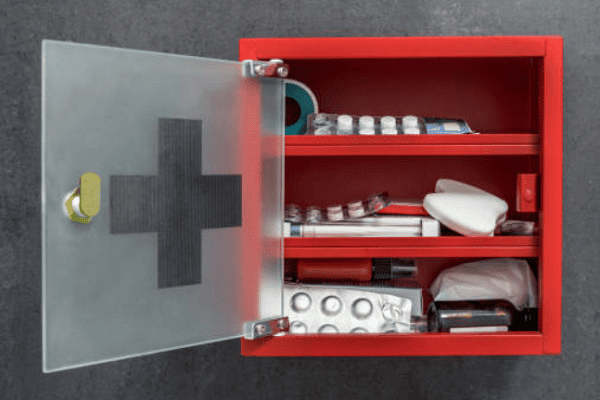
Proper storage of medications is a very important aspect of organizing your home. If any other household items can be treated more carelessly, then medicines stored at home should always be kept in order, in order, and in the right storage places.
You can't change the storage location of medicines all the time, because you always need to remember exactly where they are, because sometimes medicines play the role of emergency home care. For this reason, they should be easily accessible under any circumstances of a person's illness.
A home first aid kit does not always contain the entire set of necessary medicines, so the best solution would be to allocate a small cabinet for medicines that will be difficult for children to access, as well as for pets that love to be naughty and eat everything they find. In the cabinet for medicines, it is necessary to equip sections or install boxes (containers) with inscriptions that will contain the purpose of the group of medicines.
Medical supplies (such as bandages, adhesive plasters, sterile wipes, syringes and similar medical devices) also require orderly storage and compliance with expiration dates, just like medications.
Medications must not be transferred or poured from their original packaging or bottle into other boxes or containers. Otherwise, confusion and forgetfulness may lead to the wrong medication and, at best, the absence of the desired result, and otherwise - deterioration of health or poisoning, and even death. Also, empty cells in the containers must not be cut off, since the back of the container contains the name of the medicine, and it can be accidentally cut off or made illegible. It is better to keep medicines in pharmaceutical packaging with instructions until the last tablet or until the last drops, since, if necessary, you can always remember the purpose of the medicine.
It is better and more correct to store medications in places with low humidity, coolness and darkness, for example, in corridors or bedrooms, but not in the bathroom or kitchen, where steam always maintains a high level of humidity. Only those medicines are stored in the refrigerator, the instructions for which indicate a storage temperature of from 32 to 46 degrees Fahrenheit (8 degrees Celsius).
In no case should you throw expired medicines in factory packaging into trash bins or household buckets. Liquid products are poured into the sewer (sink, toilet), tablets are crushed into powder and sent there too. Otherwise, a situation may arise where, for example, people or animals are tempted by the prey and eat the discarded medicines.
It is necessary to store medications correctly so that you can provide yourself and your loved ones with emergency first aid without any problems, which is sometimes the first step towards saving your health and life.










Read
Read