


Emergencies >>>> First aid for lightning strike
First aid for lightning strike
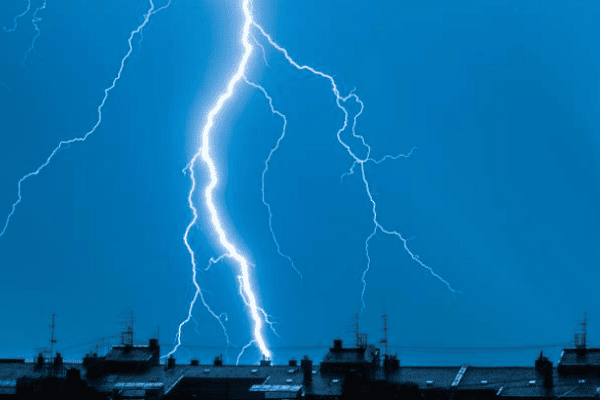
A lightning strike is a type of electrical injury, but unlike a household electrical injury, a lightning strike can strike a person in the most unexpected place, for example, in an open space (street, forest clearing, field), in a forest, and even indoors or in transport, if we are talking about ball lightning.
Lightning discharge is dangerous because it causes cardiac arrest and tissue burns. Depending on the power of the lightning strike, the damage to human health may vary. Ball lightning can kill, a powerful lightning discharge can cause cardiac arrest and severe burns, and as a result - loss of consciousness. A light lightning discharge can cause temporary loss of consciousness and cardiac arrest. If a person remains conscious after a lightning strike, this does not mean that everything ended well for his health, since the discharge of electricity from a lightning strike can disrupt the heart rhythm, cause arrhythmia, the consequences of which can appear many hours after the lightning strike.
For this reason, first aid for a lightning strike is to call an ambulance for emergency professional help. In case of fainting and the presence of a heart rhythm, a person is brought to consciousness by the usual available methods. In the absence of a heart rhythm, indirect heart massage and artificial respiration will be required on your own until professionals arrive. If there are burns, they are covered with sterile or simply dry material (protected from contamination). If the burn is contaminated, it is poured with clean water, trying to wash away the contamination with a stream of water, then they try to blot it with a dry clean cloth, and then close the burn wound until professional medical care is provided.
It is important to know that, unlike an electric shock from an electrical appliance or an electric cable, when a person must first be "de-energized" and only then touched, a lightning strike makes a person safe for first aid, since contact with electricity ceases - the electricity goes into the ground. For this reason, a person who has lost consciousness from a lightning strike is not dangerous to touch with your hands (that is, he does not need to be de-energized).
To avoid being struck by lightning, there are several precautions you should take.
- The safest places to take shelter from lightning are stone buildings without metal spires, weather vanes, or pointed roofs covered with metal.
- A dense forest itself provides shelter from lightning, but a lone tree can cause a lightning strike.
- Wooden or metal poles, reinforced concrete poles, and power line poles are also dangerous objects for lightning strikes, for this reason it is necessary to stay as far away from them as possible during a thunderstorm.
- An umbrella can cause a lightning strike, a switched on phone, tablet or laptop can cause a lightning strike, headphones that are in use can become a target for a lightning strike, and a smart watch, as an electrical appliance, can attract a lightning strike.
- Lightning can be attracted to ungrounded metal shutters or drainpipes near the walls of houses, as well as metal grates.
- Wet clothing and shoes can attract lightning strikes.
- During a thunderstorm, it is necessary to close windows and doors, since electrical appliances operating indoors may cause them to be struck by ball lightning.
There is an opinion that lightning does not strike twice in the same place. But this is not true, and lightning can strike twice metal structures, isolated trees, poles and similar places. Lightning will not strike twice the same electrical appliance, as it will burn out on the first strike, but lightning can strike a person twice, as he himself is a source of small electric charges. For this reason, it is necessary in any case to seek shelter from lightning during a thunderstorm, even if the lightning strike occurred nearby.












Read
Read













