


Vitamins and minerals >>>> What are the benefits of Vitamin B1 or Thiamine?
What are the benefits of Vitamin B1 or Thiamine?
Vitamin B1 or Thiamine is a very important vitamin from the B group. However, it has some unique properties: it is half destroyed by heat, and completely destroyed when foods containing vitamin B1 are processed in an alkaline environment, such as when baking baked goods with soda or ammonium salts, or when treating vegetables and grains with alkaline solutions (such as soda) to improve cooking. Once absorbed by the body, vitamin B1 is absorbed by muscles (including the heart), liver tissue, and the brain. This explains its effects on the circulatory, digestive, and nervous systems. When vitamin B1 enters the body, hemoglobin levels and red blood cell count increase. Vitamin B1 (or Thiamine) is considered a growth vitamin because it influences the intensity of metabolic processes.
The less a person absorbs vitamin B1, the worse the cardiovascular system functions, since vitamin B1 is responsible for:
- for increasing capillary tone,
- for the expansion of the lumen of capillaries,
- and thus regulates blood flow.
If the body lacks thiamine, the nervous system suffers a number of disruptions, as vitamin B1 is responsible for an unstable increase in the excitability of nerve centers. This affects the digestive system (especially intestinal motility), and impairs gastric emptying. A decrease in vitamin B1 affects the endocrine system, particularly many organs responsible for secretory functions (gastric acidity, proper thyroid hormone function—in cases of thyrotoxicosis, vitamin B1 is administered in higher doses).
Although vitamin B1 is found in most foods commonly consumed by humans, vitamin B1 deficiency occurs because foods containing vitamin B1 are processed with substances and at temperatures that destroy this vitamin partially or completely.
Foods such as brewer's yeast are not recommended for use when heating foods to which it is added. When baking yeast products with baker's yeast, vitamin B1 is partially destroyed, despite its high content in this type of product (2 to 5 mg per3.5 ounces).
Wheatgrass contains relatively high levels of vitamin B1 (2 mg per3.5 ounces). However, it must be eaten raw, otherwise, cooking partially destroys the vitamin B1. Wheat contains 0.4 mg of vitamin B1 per3.5 ounces, but wheat flour contains half that amount (0.2 mg per3.5 ounces ). Baking bread with wheat flour reduces the vitamin B1 content in flour products by another half.
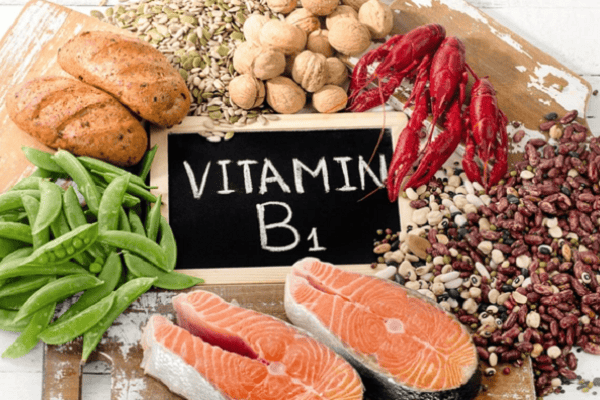
Vitamin B1 is found in cereals (barley, buckwheat, pearl barley) in amounts of 0.2–0.5–0.4 mg per3.5 ounces of product, respectively. However, heat treatment reduces its content by half. Among meat products, ham contains the most vitamin B1 (0.7 mg per3.5 ounces (not fried, not stewed, not baked)), while poultry, pork, beef, and lamb contain only 0.2 mg per 3.5 ounces of product. Heat treatment of these products reduces their vitamin B1 content.
Vitamin B1 is significantly influenced by carbohydrates and proteins. If their content in food is high, the daily requirement for vitamin B1 increases. The typical daily intake of vitamin B1 in a person's diet can range from 0.5 to 3 mg.
The impact of vitamin B1 levels during intense physical activity (for example, in athletes or people who engage in intense sports, or in people whose work involves high physical exertion) can impact body fatigue (fatigue). For this type of activity, vitamin B1 doses are increased to 20 mg.
Vitamin B1 is a low-toxic substance, so up to 30% of its absorption and storage in liver cells and up to 50% in muscle tissue does not affect the functioning of these organs. Taking vitamin B1 supplements in high doses can cause unpleasant side effects if not justified by physical activity or medical conditions. Dizziness, nausea, headache, and rapid heartbeat may occur, but all symptoms of vitamin B1 overdose disappear immediately after discontinuing the supplement.
Vitamin B1 deficiency can lead to a condition in which a person has difficulty moving their legs (beriberi). This sensation resembles being shackled by heavy shackles. However, vitamin B1 deficiency is only found in regions where the diet emphasizes processed, polished grains (without the rough husk), such as rice or refined wheat.












Read
Read













