


Healthy food >>>> How to properly store flour and flour products?
How to properly store flour and flour products?
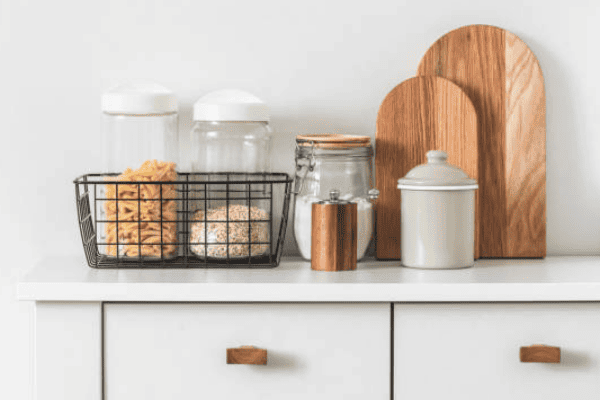
Flour and pasta are long-term storage products, which allows you to stock up on these products for years. But to prevent them from spoiling during storage at home, you need to know and follow several rules for preserving such food products. How to properly store flour and flour products at home if there are no special conditions for storing them?
It is important to know that flour has storage periods depending on its quality, which for premium flour are five to seven years, and for lower grade flour are 2 to 4 years. But these storage periods require special storage conditions for a product such as flour. Since the flour production process itself requires complete drying of the grain for threshing and subsequent milling, the resulting flour must be stored in an absolutely dry state, which can be maintained at home.
If the purchased bag of flour is packaged in polyethylene, then this is a violation of the storage rules, since flour should initially be packaged in paper bags or cloth bags. It happens that when buying and carrying flour home, the bag of flour can get damp or wet, for example, if the bag was carried during rain or high humidity outside. Damp bags of flour cannot be stored, but you can fix the situation if you pour flour from a damp bag, dry it, and only then can you leave the flour for storage. It is enough to pour the flour on paper without printing ink in a dry room and shake the paper for several days, trying to roll the flour scattering on different sides to dry. Then collect the flour in a paper bag or a cloth bag and store in a dark and dry place.
Dry flour can also be stored in plastic barrels (containers with a hermetic lid), if the plastic is intended for dry food products. If you have a glass jar with a hermetic lid at home, it will also be suitable for storing flour. During the entire shelf life of the flour, if it is designed for many years, the flour is periodically poured out onto paper, dried and put back into a container suitable for storage.
To prevent insect larvae and insects from breeding in flour, garlic cloves are placed in bags or other containers with flour. As the garlic cloves dry out, they are replaced with fresh cloves.
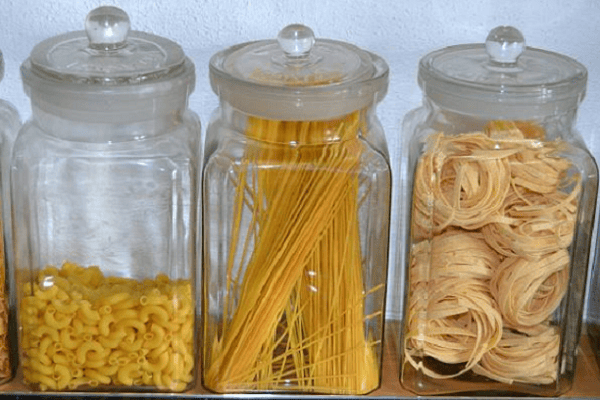
Pasta has a shorter shelf life than flour itself. Properly dried pasta can be stored for six months to a year. But pasta requires low humidity and dry air for long-term storage, as it quickly absorbs moisture, including steam. The absorption rate depends on the technological features of the preparation of pasta in production. Don’t store pasta in rooms where steam can form, for example, in rooms with a humidifier or in the kitchen, where boiling or frying during cooking creates steam. Steam causes pasta to swell and spoil prematurely.
Wheat grain is used not only for flour and pasta, but also for the production of cereals (spelt groats). Cereals from wheat grain also require storage conditions. Wheat cereals are stored in the same way as flour, in paper bags, fabric bags, plastic or glass sealed tanks, containers and jars for food products. Cereals are often sold in polyethylene or cellophane bags. For storage, it is necessary to pour the cereal into a container suitable for long-term storage. Cereals can be periodically dried on paper and again poured for storage into paper, fabric, glass or plastic containers.
Bread is made from flour, which can be converted into rusks and stored much longer than the bread and flour themselves. But rusks, like pasta, easily absorb moisture and become moldy, which requires storing rusks under the same conditions as pasta.
Garlic cloves are also added to containers with pasta, crackers or cereals for long-term storage to get rid of pests and musty odors.












Read
Read













