
Privacy policy

The Internet resource uses cookies in its work to be useful to you. You can read more about the cookie policy for this resource More details   >>>


Healthy food >>>> How to store fats and oils at home

How to store fats and oils at home
Homemade animal fats are the longest-lasting foodstuffs and can be stored in a refrigerator or cool basement. However, even these fats are prone to spoilage (becoming rancid) if not prepared or preserved correctly. For example, the best preservative for refractory animal fats is salt (especially heated in a frying pan or on a baking sheet in the oven). Mixing a tablespoon of heated salt with a kilogram of refractory animal fat (beef, lamb, or pork) significantly extends the shelf life of the fats.

Preserving refractory fats in the form of lard also has its limits. Only salted lard sheets can be stored the longest without refrigeration. Fresh lard can also be preserved without refrigeration or freezing temperatures by sprinkling it with layers of salt (3% salt per 100% of the lard's mass).

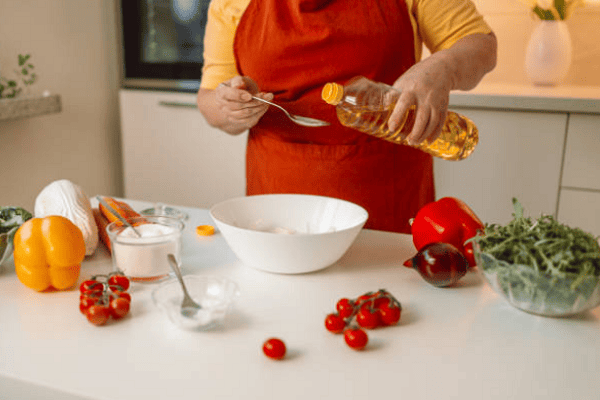
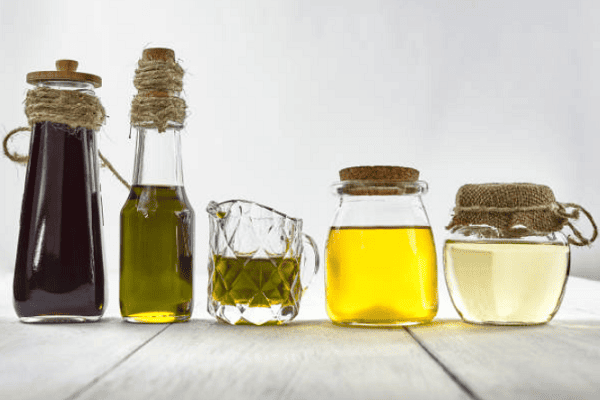
Vegetable oil can be stored in a dark place, sealed and unrefrigerated, for up to a year. However, this only applies to oils stored unopened in store-bought containers (plastic, tin, or glass). Homemade vegetable oil may contain components that prevent liquid oil from being stored in an airtight container outside of a refrigerator or cool place for more than two months. An open container of vegetable oil without a sealed lid can be stored without refrigeration for about a month. Adding salt (one teaspoon per liter of oil) can slightly extend the shelf life of vegetable oil.

Refined and unrefined oils are stored differently because they undergo different processing techniques. Refined oils are more stable than unrefined oils. Mixing different types of oil for storage is not recommended, as they may release sediment.

Butter is the least stable butter for long-term storage without freezing. In the refrigerator, butter should be stored in a closed glass or dark glass container, or in a porcelain container. Butter easily absorbs the odors of various foods, so it should be stored separately from strongly aromatic foods. Deodorizing butter with various aromas degrades its quality, as aromas are volatile essential oils that have a fatty structure similar to butter and easily penetrate it. They spoil the natural milky aroma of butter and the creamy taste of this product. Flavoring butter is acceptable only immediately before use, for example, by sprinkling it with spices (ground or leafy). Examples of this are dill oil, onion oil, mustard oil, hot oil with the addition of crushed garlic, ground garlic, or ground pepper. Butter with aromatic additives should not be stored in the refrigerator for long periods to prevent changes in its flavor.

All types of fats and oils do not like high temperatures, hot rooms, and proximity to heating devices or heated dishes, heating toasters, electric kettles, electric stoves, ovens, and similar devices that heat the atmosphere around them.



Read


Read



New in Sections


How is Artificial Intelligence useful in medicine?

What is Artificial Intelligence, how does it work in medicine, and what distinguishes Artificial Intelligence from Human Intelligence

Ortholens

The orthokeratological method of treating myopia and the diseases that it accompanies is based on the effect of redistributed pressure on the surface, forcing it to change refraction

Royal jelly – what is it?

With the development of technology, it has become possible to more accurately study the composition of Royal Jelly and understand how it can be used in medicine

What are the useful properties of Savoy cabbage?

The useful properties of Savoy cabbage are well known, although it is not often used in healthy eating as it should be

Medicines from the garden

Many medicinal plants still grow nearby, in forests, gardens, and vegetable patches. Here's a list of fruits and berries that are quite capable of replacing medicinal plants

What are the benefits of Lungwort?

Lungwort is an ancient medicinal plant used to prepare infusions with healing properties. These properties of lungwort are used in

How to treat a cough?

Before treating a cough, it's important to understand the underlying causes. If cough treatment fails, then

Principles of osteochondrosis prevention

A person can prevent the development of osteochondrosis themselves, applying a minimum of effort to this process and using the principles of preventing the development of osteochondrosis

How to combine poor health and physical activity?

To balance poor health and exercise, it's important to consider some of the characteristics of how symptoms of poor health develop. You can use manageable exercise for your current poor health

Exercises to strengthen coordination and balance

This set of simple sports exercises for developing coordination and a sense of balance will help you maintain physical agility

Products for home cosmetology

Products for home cosmetology are in the kitchen. How to combine cooking with the preparation of useful cosmetics for skin and hair?

How to disguise skin defects?

Exposed areas of skin do not always look perfect, but it is possible to mask skin defects without resorting to complex cosmetic methods

How do bronchodilators help?

The dilating effect of this group of drugs means an impact on the contractility of the smooth muscles of the bronchi, on the secretory function of the bronchial mucosa, which allows

Where does cholesterol come from in the body?

Cholesterol is an integral part of metabolism and a vital substance for most physiological processes in the human body. But where does cholesterol come from in the body?

How to give medications to a pet?

Almost all forms of medication for animals are inconvenient to use. So how to give medication to a pet if there is a need for their mandatory intake?

Home observations of pets’ health

Do not neglect frequent examinations of your pet’s health at home, as pet illnesses can develop unexpectedly