


Healthy food >>>> How to preserve nutrients during canning?
How to preserve nutrients during canning?
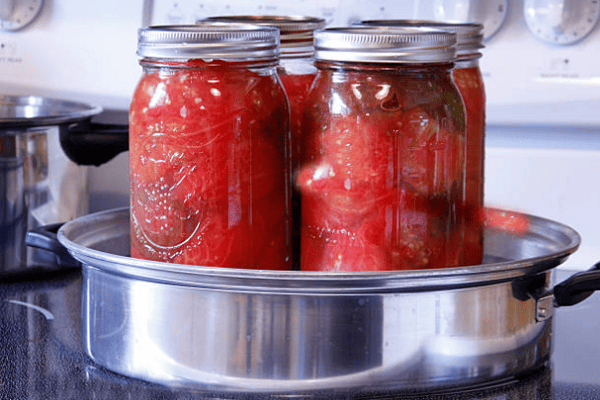
Preserving seasonal fruits, vegetables, berries, and herbs is most effective when their nutrients are preserved for a long time. However, to preserve the nutrients in fruits, vegetables, berries, and herbs during canning, it's important to learn several gentle canning techniques that don't destroy them during the canning process. This will ensure these fruits and vegetables remain nutritious for a long time beyond their growing and harvesting seasons. Heat treatment is an integral part of the canning process. Its destructive effect on the nutrients in fruits and vegetables can only be avoided by reducing the time the heat is applied to the canned fruits and berries. Three methods are known for preparing and preserving fruits, vegetables, and berries: blanching, steaming, or boiling, and reducing cooking time.
The most successful methods for preserving thin-skinned fruits and berries are blanching (or steaming or boiling). This method can be used to preserve black, red, and white currants in their own juice, cherries in their own juice, apricots and peaches in their own juice, tomatoes in their own juice, and pickled cucumbers, tomatoes, zucchini, cabbage, beets, and carrots.
Blanching involves immersing berries, fruits, and vegetables in boiling water for one to three minutes, removing them and placing them in jars, sprinkling them with sugar, pouring boiling water over them, and sealing them tightly with lids. The thinner the skin of the fruit being preserved, the shorter the blanching time. One minute is sufficient for blanching currants, apricots, peaches, and thin-skinned tomatoes. A maximum of three minutes of blanching is required for thick-skinned tomatoes, plums, gooseberries, and similar fruits. Tomatoes, cucumbers, zucchini (cut into pieces), and pitted cherries are blanched without blanching.
Currants, apricots, and peaches in their own juice don't require the addition of their own juice; instead, just add sugar and boiling water to the halved, pitted fruits (for peaches and apricots). As the canned fruits age in a sealed jar, some of their juice will be released into the water, creating a concentrated sweet syrup that preserves the fruit and all its beneficial nutrients.
Boiling marinades also preserve the essential nutrients in fruits, berries, and vegetables, but vinegar treatment can destroy some of the nutrients and convert them into other components. Vinegar marinating should be avoided whenever possible if the task is to preserve all the nutrients.
Preserving in their own juice (literally) is considered one of the most successful ways to preserve all the nutrients in fruits for a long time. For example, tomatoes and cherries can be preserved in their own juice. Concentrated apple, cherry, and tomato juices can also be used to preserve other fruits. For example, apple juice can be used to preserve pears, plums, thin-skinned tomatoes, and peeled beets. Cucumbers, zucchini, cabbage, and carrots can be preserved in tomato juice. Apples, plums, pears, cabbage, carrots, beets, raspberries, strawberries, and gooseberries can be preserved in currant juice. Such concentrated juices contain high levels of ascorbic and citric acids, which are natural preservatives. While the juice itself may lose some of its nutrients, the fruits preserved in it do not.
Another method for preserving fruits and berries is to make five-minute jams or multi-stage jams in thick sugar syrup. The principle behind preserving fruit in this method is to reduce the boiling time from 5 to 20 minutes. Berries with thin skins and a delicate texture are boiled for five minutes each. These jams don't have a very long shelf life (only up to 6-8 months). Jams cooked in two stages, with 10-20 minutes of boiling each stage, preserve almost all of the nutrients. To avoid obvious boiling, the syrups for these types of jams are concentrated (with minimal water added), as water causes a vigorous boil rather than melting the sugar in the syrup, which in turn causes the fruit to boil vigorously. Jams with concentrated syrups can be stored for more than a year, but the longer such jam is stored, the more sugary its consistency becomes – the jam thickens to a very viscous state.
A raw canning method is used for preserving jams and sauces. Such preserves are stored in the refrigerator for a short time, but this helps extend the season of fruits, berries, and vegetables. For example, for berry jam made from black or red (white) currants, or for raspberry or strawberry jam, simply add sugar to the berries in a ratio of one volume of berries to two volumes of sugar. Mix the jam thoroughly until it becomes a puree (blanch the currants for one minute, and steam or boil the raspberries and strawberries). For the sauce, mix the tomato pulp with salt, crushed garlic, or onion (to taste). You can add apple or plum pulp to the tomato pulp, or combine apple and plum pulp without the tomato. These thick sauces can be spicy and salty or spicy and sweet. Vegetable sauces should be stored in the refrigerator for no longer than one month. Plums, apples, and tomatoes are blanched before making these sauces.
If the task of canning is to preserve nutrients, then it is necessary not to crush fruits and vegetables, for example, do not grate them, do not crush them to a puree state, do not cut them into too small pieces, since oxidation processes begin at all cuts, destroying useful substances.
It's important to note that some fruits and vegetables contain enzymes that oxidize ascorbic acid, rendering it ineffective as a vitamin. These enzymes are found in pears, apples, grapes, apricots, and peaches, horseradish roots, cabbage leaves, and carrot and potato roots. To prevent the destructive effects of these enzymes, avoid chopping or grating these fruits and vegetables too finely. This is because the destruction of the fruit's cellular structures activates the destructive enzymes. To prevent these enzymes from acting, they are inactivated by steaming or blanching them beforehand.
Vegetables, fruits, and berries preserved through gentle canning will be as healthy as fresh fruits and vegetables for a long time, adding variety and vitamins to your diet.












Read
Read













