


Health for a lifetime >>>> Melatonin and health
Melatonin and health
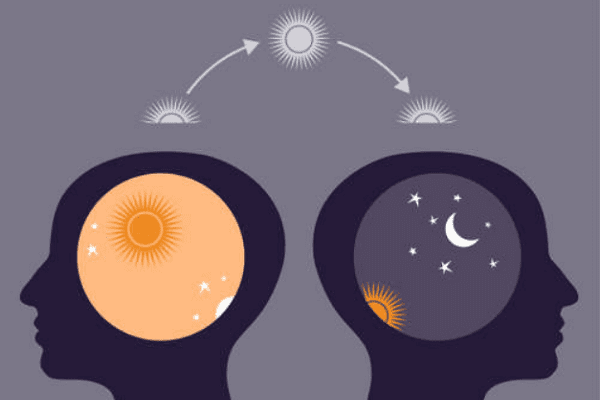
Sound and healthy sleep is a very valuable property of the body. But modern life in stress, lengthening working hours due to shortening time for sleep, choosing night time for entertainment (reading books, watching movies, nightclubs), as well as frequent changes of time zones destroy the natural rhythm of sleep and wakefulness, inherent in the human body by nature .
The circadian rhythm, which regulates the alternation of sleep and wakefulness, is disrupted, and this in turn leads to even greater disruptions in the natural processes of the nervous system - to the next round of stress and sleep disorders. Without sleep, a living organism does not have a period of rest for the nervous system, which regulates all other systems in the body. And this means the beginning of the development of diseases of various organs and their systems.
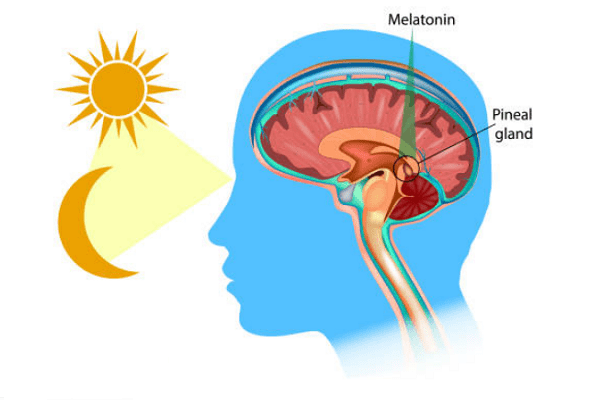
Correct circadian rhythm is regulated by the hormone Melatonin, which, with its quantitative indicators in the bloodstream, transmits information to the body about the light regime in the human environment. This is a kind of biological hypnotic that the body itself can synthesize and produce. The absence of light stimulates the secretion of Melatonin, and bright light inhibits the secretion of Melatonin. Scientists have noticed that blue, cyan and green lighting also reduces Melatonin levels in the body. This glow is produced by electronic screens (TVs, computers, tablets, smartphones and e-readers with moving pixels - without technology...) and fluorescent lamps.
An interesting fact is that newborns do not produce Melatonin until three months of age, but enter the body with mother’s milk. The peak state of quantitative indicators of natural Melatonin production was recorded in children of five to seven years of age. Further, over the course of life, the production of Melatonin decreases, which ultimately leads to age-related insomnia.
Melatonin is responsible for the health of the entire body. The synthesis of Melatonin is directly related to the synthesis of Serotonin, and this connection creates a natural calmness of the nervous system, resistance to stress, energy, a joyful mood and, as a result, the overall health of the body. But with circadian rhythm disturbances, there is a disruption in the secretion of Melatonin, and a person cannot fall asleep in the dark, and begins to doze off during daylight hours. When Melatonin levels are low, not only insomnia develops, but also fatigue, increased nervousness and depression.
In nature, Melatonin is produced not only by representatives of the animal world, but also by plants, many of which are food plants and are consumed by humans. High Melatonin content is found in food plants, such as cherries, cherries, bananas, grain crops (wheat, rice, oats, rye), pine nuts, and bran. Drinks Coffee, Tea, Beer and alcoholic drinks with a high percentage of alcohol contain high concentrations of Melatonin. These concentrations do not correspond to therapeutic doses of Melatonin. High Melatonin content in foods or an overdose of pharmaceutical Melatonin can cause an unexpectedly opposite effect - sleep disturbance.
It is very easy to disrupt the circadian rhythm, but it is extremely difficult to debug its work. This requires a transition to a strict sleep-wake schedule, taking medications containing Melatonin, as well as developing a special diet. Considering these features of the life of the body, created by nature itself, it is worth maintaining natural circadian rhythms and avoiding sudden changes in the alternation of sleep and wakefulness. The body knows how to rearrange its circadian rhythms itself, but it needs quite a long time for such a restructuring. This property of the body should be taken into account when switching to night work or when moving to other time zones.












Read
Read













