


Home cosmetology >>>> How to use Rosemary in home cosmetology?
How to use rosemary in home cosmetology?
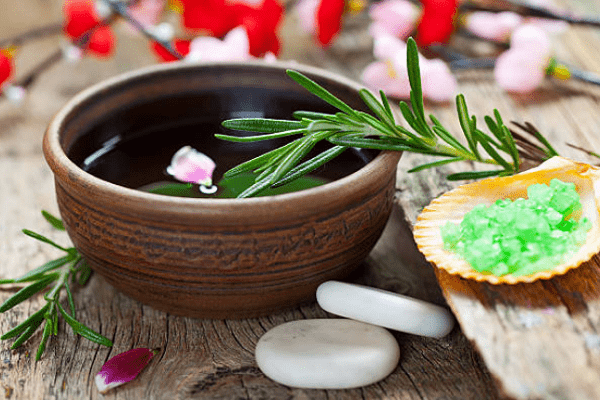
Rosemary is a legendary plant, the use of which originates in the ancient technologies of home rituals of fumigating rooms, which attracted happiness and health to the house. Rosemary is historically known as the plant of youth, the victory of life over death - it was this plant that the ancient Greeks and Romans dedicated to the goddess Aphrodite.
The most ancient sacred aromatic plant has found itself in the category of medicinal plants due to its various medicinal properties. As a medicine, Rosemary is used in infusions and teas to improve digestion (increases the enzymatic activity of the gastrointestinal tract and enhances intestinal peristalsis), for vascular tone, as a means of calming and relaxing the nervous system. For these purposes, both fresh Rosemary and dried leaves, buds and flowers of the plant are suitable.
The aromatic oil of leaves, buds and flowers of Rosemary contains very valuable substances linalool, borneol, camphor and tannins, which are used in the perfumery and cosmetic industry as ingredients that improve skin quality, irritants and antiseptics for external use on the skin and mucous membranes. In the pharmaceutical industry, Rosemary essential oils form the basis of many drugs for the treatment of stomatitis, furunculosis and various purulent inflammations.
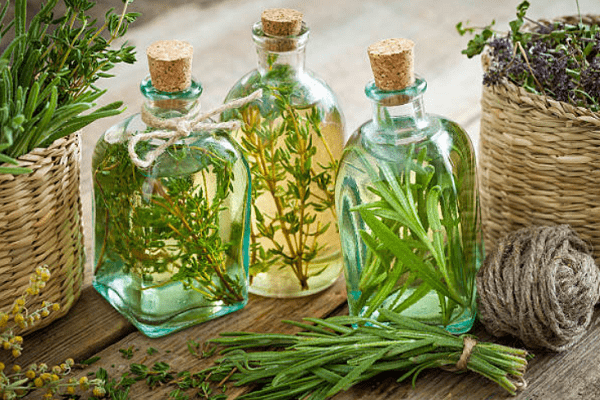
Rosemary essential oil extract can be obtained at home by grinding the plant mass of Rosemary, and then preparing infusions, lotions, masks, rubbing, and applications from the resulting product.
Freshly grated leaves, buds and flowers of Rosemary brewed with boiling water make it possible to obtain an extract of useful substances that can be used to prepare baths for the body, to rinse the hair and scalp, to rinse the throat and mouth. The infusion is made at the rate of one volume of fresh green mass of Rosemary per one volume of boiling water. So that the beneficial substances in the infusion do not decompose under the influence of sunlight, the infusion is kept in a dark place or in a dark glass container before use. For problematic and inflamed skin, the concentrated infusion is diluted with water before rinsing to reduce the effect of skin irritation and redness. The irritating effect of Rosemary oils plays the role of a dilator of small vessels of the skin and mucous membranes, capillaries, which is very important for restoring the nutrition of the skin and mucous membranes by improving blood microcirculation. Baths for joints are built on the same effect, when an irritating effect has a therapeutic effect (on the same principle as the application of mustard plasters or pepper patches). Baths, compresses, lotions and rubbing from Rosemary are categorically contraindicated in skin diseases associated with persistent inflammation, with Rosacea disease and capillary reticulum protruding on the skin of the face.
You can rinse your hair regularly with Rosemary infusion (after each shampoo) to restore shine to your hair. The result of such rinsing looks especially impressive on the hair of dark shades, where the shine is more noticeable.
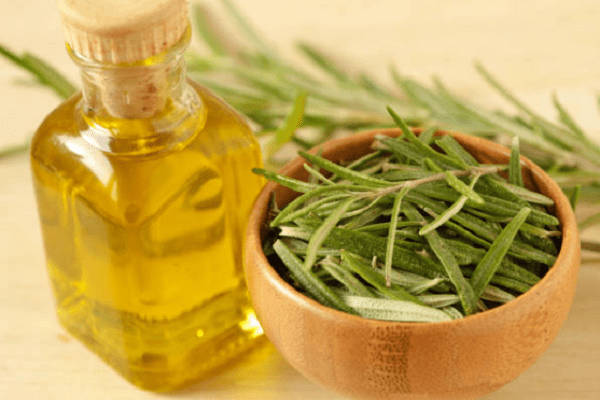
It is easy to prepare a mask for hair and skin of head from fresh rosemary leaves. For these purposes, fresh rosemary leaves are lightly ground in a mortar and poured with Almond oil (half a glass of fresh leaves per 0.7 ounces of oil). Rosemary is insisted on oil for two weeks in a dark place in a sealed container at room temperature. Then the oil is filtered and stored until it is used to prepare a hair mask. The resulting oil is heated in a water bath to a temperature of 86-104 degrees Fahrenheit (30-40 degrees in Celsius) Fahrenheit before use and applied in a small amount to the hair roots, comb them to evenly distribute the oil over the entire surface of the hair and scalp. Pick up the hair and wrap it with a warm towel (the towel can be heated on a heating device or on a hot dryer, or ironed with a hot iron). The mask lasts for 15-30 minutes (depending on the length of the hair - on short-cut hair, you can keep the minimum of the specified time). Next, the mask is washed off with a light shampoo and the hair is dried naturally (not with a hair dryer). Such a mask relieves fatigue of the scalp, nourishes the root system of the hair, improves the quality of the hair itself.
To prepare lotions for rubbing the skin or elixirs for rinsing the mouth or throat, fresh rosemary leaves are thoroughly ground in a mortar and pour boiling water in the proportion of one volume of fresh leaves to one volume of boiling water. The cooled infusion is filtered. The infusion of Rosemary is concentrated, which implies its dilution before use in a ratio of 1:1 (1 part infusion and one part water) to wipe the skin. But for the purposes of rinsing the throat and mouth, the infusion can be used in concentrated form, but not swallowed.
For rubbing the skin in order to improve blood circulation and warming effect, a concentrated infusion of Rosemary is used. To wipe the face, Rosemary infusion is always diluted with water - the exception is lotions in limited places of purulent inflammation, to which you can apply a cotton swab moistened with concentrated Rosemary infusion. Purulent foci can be neutralized with applications of freshly squeezed juice of rosemary leaves. Only a limited area of suppuration is treated with juice, applying a cotton swab moistened with juice from squeezed leaves. The concentrated juice from fresh rosemary leaves is close in its effect to the action of boric acid, and this must be taken into account when using juice and concentrated infusions from rosemary.
All cosmetic products made from Rosemary are stored in a dark glass container and away from sunlight. Dry rosemary also in the shade or dark places to keep the beneficial ingredients from decay under the action of ultraviolet radiation.












Read
Read













