

Curative cosmetology and cosmetic medicine >>>> Why does hair quality change?
Why does hair quality change?
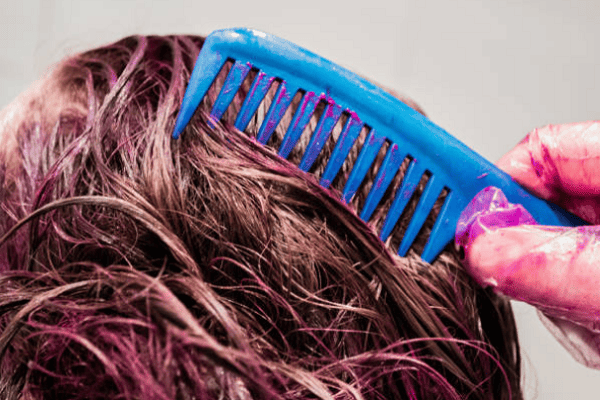
Hair is not uniform in its physiological structure, and any mechanical, physical or chemical impact on it leads to changes in this structure, sometimes persistent and irreversible, leading to a change in the quality of the hair and further hair loss.
Modern cosmetology has introduced many chemicals into regular hair care and hair decoration, which do not have a beneficial effect on all hair types, and when used repeatedly can lead to hair disease of any type.
Frequent use of highly alkaline compounds for degreasing hair can damage not only the hair structure itself, but also the structure of the hair follicle.
Coloring your hair without taking a break and resting your hair can also change the quality of your hair.
Bleaching your hair before coloring affects the hair shaft and structure in a way that can change the quality of the hair.
Frequent hair perming (especially permanent types of perming) can lead to permanent changes in the quality of hair and even to an incurable disease.
Excessive use of curling irons, electric curlers with high heating temperatures, and hair straightening irons can damage the structure and quality of hair.
Daily combing of hair with combs with hard and frequent teeth changes the qualitative structure of hair.
In medicine, there is a term to describe the altered quality of hair due to constant mechanical, physical or chemical trauma - trichomalacia, which means "hair softening". But to a greater extent, this phenomenon is called "hair melting". This hair disease is rarely genetically programmed, but often results from the abuse of various highly active chemical, physical or mechanical hair care methods.
The peculiarity of such pathology as "Trichomalacia" is the fact that not only the hair shaft "melts", but the hair follicle also suffers, which leads to the appearance of bald spots in the hair (focal alopecia). And this is already a serious painful phenomenon that requires medical intervention.
Signs of hair shaft melting are quite obvious: hair becomes sticky, difficult to comb and generally separates, becomes like tow. Dyeing does not change the dull condition of hair, but, on the contrary, worsens the situation.
Hair can be brought out of a painful condition if you manage to do it before it starts to fall out. In order to stop the process of hair destruction and restore the quality of hair:
- stop all types of hair coloring (even those based on natural dyes), as well as partial coloring of strands;
- categorically stop bleaching your hair, thermally or chemically curling it, or blow-drying your hair;
- don’t use chemical styling products (hairsprays, gels, waxes), don’t use silicone to strengthen and thicken hair ;
- don’t use hair masks, hair care balms, hair care lotions, nourishing hair creams, hair rinses, hair conditioners, tonal shampoos, aromatic products (perfumes, perfume water, sprays) for hair and any other products that were usually used before the onset of the pathological process;
- don’t use hair care products that are designed to reduce hair oiliness;
- don’t backcomb your hair, don’t use elastic bands to tie ponytails and braids, don’t do tight hairstyles with tension on the hair, don’t use hair extensions;
- hair is washed only with warm water (no more than 86 degrees Fahrenheit (30 degrees Celsius)) and slightly alkaline medicinal shampoos without conditioners and other chemical reagents;
- hair is washed no more than once a week, even in cases when it seems that it is becoming oily;
- trim their hair more often than usual to regularly cut off damaged hair shafts.
As long as the hair follicle is not destroyed, the hair will grow and recover on its own, and the oiliness of the skin will allow the hair to acquire its natural (given by nature) lubrication.
In case of hair loss, pathological thinning of hair or focal alopecia, consult a doctor trichologist to assess the situation and choose the necessary professional medical treatment.









Read
Read